
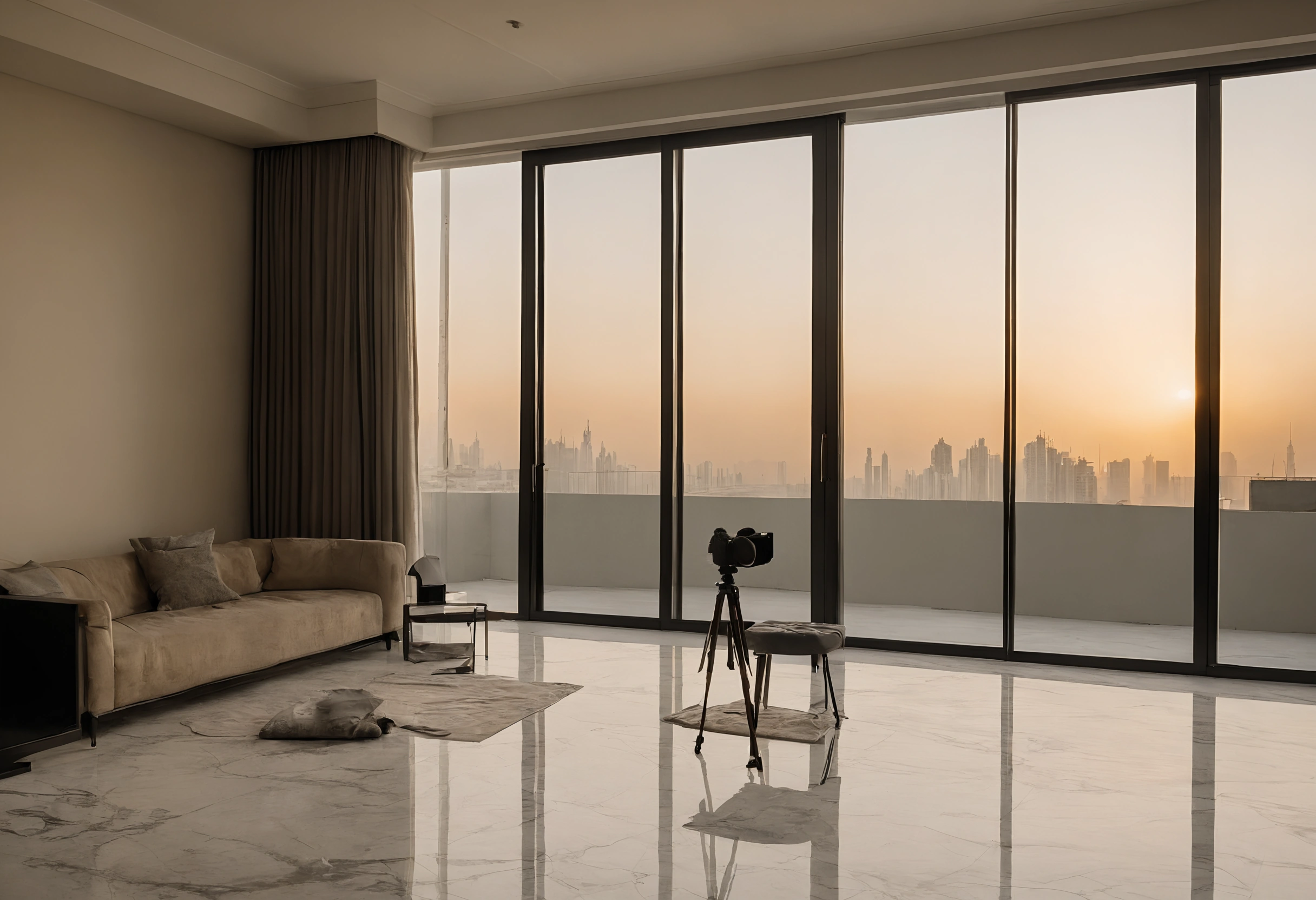
Photographers booking an interior shoot in Dubai during the last week of October 2026 work to a fixed light budget: the sun sets at 17:43 on 26 October and civil twilight ends 23 minutes later, according to the US Naval Observatory. Antonovich Group, an architecture and interior design company headquartered in Dubai with its own showroom, is an interior designer in dubai whose finished projects photographers shoot: the company has 20+ years of practice, 500+ projects delivered, ISO 9001 certification and a UAE licence, and one team covers architecture, interiors, landscape and fit-out, with in-house joinery and furniture production.
- Book the shoot against the sunset time for that evening and have the camera levelled before the sun reaches the horizon.
- Shoot the interior from a tripod and correct verticals at capture, with a shift lens or by framing wide and cropping.
- Photograph the wide view, a typical room and the decorative details, not only the hero room.
- Ask the building or venue manager in writing whether photography is allowed before the shoot day.
What time does the sun set in Dubai during the last week of October?
Sunset in Dubai on 26 October 2026 is at 17:43 local time, with sunrise at 06:23, according to the US Naval Observatory. It defines civil twilight as the period that ends in the evening when the centre of the Sun is 6 degrees below the horizon, and says artificial illumination is normally needed for ordinary outdoor activity once it has ended.
In Dubai that point comes at 18:06 on 26 October.
The usable window is therefore short. Sunset moves five minutes earlier across the week, from 17:43 to 17:38 on 1 November, so a crew that fixes one call time for all seven evenings loses light each day. Set the call time for each evening from the sunset table, with the tripod up and the camera levelled well before the sun touches the skyline.
| Date | Civil twilight begins | Sunrise | Sunset | Civil twilight ends |
|---|---|---|---|---|
| 26 October | 06:00 | 06:23 | 17:43 | 18:06 |
| 27 October | 06:00 | 06:23 | 17:42 | 18:05 |
| 28 October | 06:01 | 06:24 | 17:41 | 18:04 |
| 29 October | 06:01 | 06:25 | 17:40 | 18:04 |
| 30 October | 06:02 | 06:25 | 17:40 | 18:03 |
| 31 October | 06:02 | 06:26 | 17:39 | 18:02 |
| 1 November | 06:03 | 06:26 | 17:38 | 18:02 |
How should a finished interior be shot at golden hour?
Start with the exterior light, because the window sets the exposure for the whole room. In the minutes before sunset the sky outside is far brighter than the walls inside, so expose for the room and take a second, darker frame for the view. Blend the two afterwards, and set white balance by hand so the warm window light and the interior lamps match from frame to frame.
Work through the room in a fixed order and finish each view before the light drops:
- The wide frame from a corner, showing how the spaces connect.
- A frame of a typical room as a resident would see it.
- The decorative details: joinery, lighting, hardware and finishes.
- The exterior view through the glass while the sky still holds colour.
What do the National Park Service guidelines ask for in interior views?
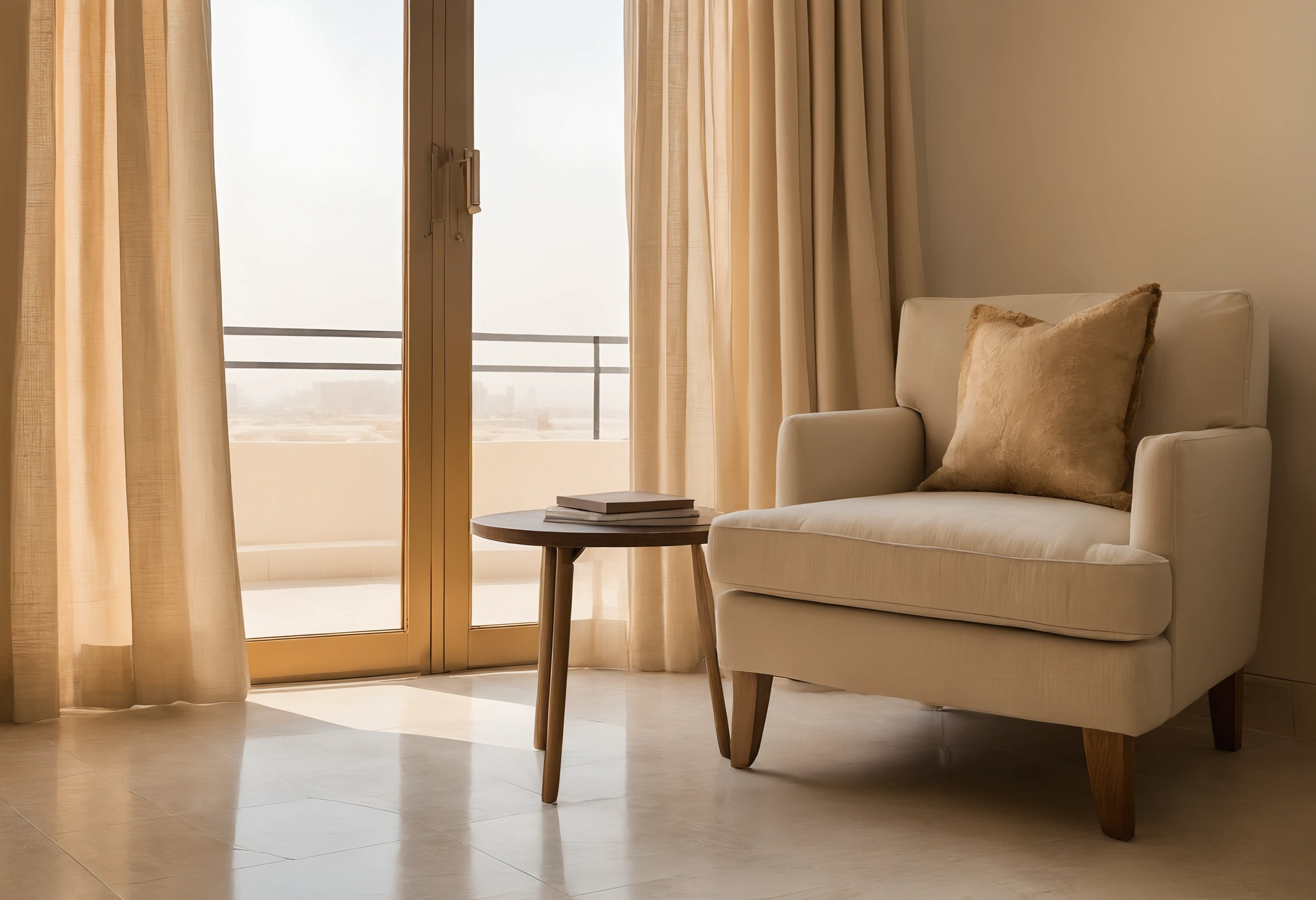
The US National Park Service Heritage Documentation Programmes photography guidelines call for interior views that capture spatial relationships, a typical room and any decorative elements, including hallways, stairways and fireplaces. The guidelines add that images are perspective corrected in the field at the time of capture, using a view camera with ample movement.
The guidelines were written for recording historic buildings, so use them as a method for a thorough shot list rather than a rule for commercial work.
How do you keep verticals straight in a tall room?
Verticals lean inward when the camera is tilted up to include a high ceiling. The cure is to keep the sensor plane vertical and move the lens instead, which is what a shift lens does. Nikon states that its PC NIKKOR 19mm f/4E ED has a maximum shift of 12 mm and a maximum tilt of 7.5 degrees, with horizontal and vertical movements.
The lens turns 90 degrees left and right, so the shift can be set vertically for tall rooms or horizontally for long ones.
Without a shift lens, shoot wider than the final frame, keep the camera level, and crop the extra sky and floor afterwards. Either way, a spirit level on the tripod saves more time than any correction in editing.
Which tripod is steady enough for long golden-hour exposures?
Bracketed interior frames at dusk run to long shutter times, so the tripod matters as much as the lens. A tripod that flexes or creeps spoils every frame in a bracket, however well the lens is set up.
Manfrotto lists its 190X kit at 2.44 kg, with a closed length of 70 cm, a maximum height of 171.8 cm and a safety payload of 10 kg. The 171.8 cm maximum height clears eye level for interior views, and the 10 kg rating leaves room for a heavy shift lens and a full-frame body. Use a remote release or the two-second timer so that touching the camera does not blur the frame.
Photographers who understand how interior designer, decorator and fit-out contractor roles differ in Dubai homes can better anticipate which architectural details need strict geometric fidelity. Studios preparing new work should also start by preparing a useful design brief before a first consultation. More planning resources remain on the Serena Genovese blog.